This post contains affiliate links. I appreciate your support.
Endurance athletes tend to be seen as a little bit crazy.
The long hours of training, the exhaustion during and after an event, and the desire to actually put your body and mind through multiple hours of physical activity are not something that too many people are interested in doing.
The problem is, once you have had a taste of an endurance event (half marathon, full marathon, triathlon, Ironman), it becomes addictive and you just want to do more of them in different places and for different (longer) distances.
On May 19 this year, I did something crazy.
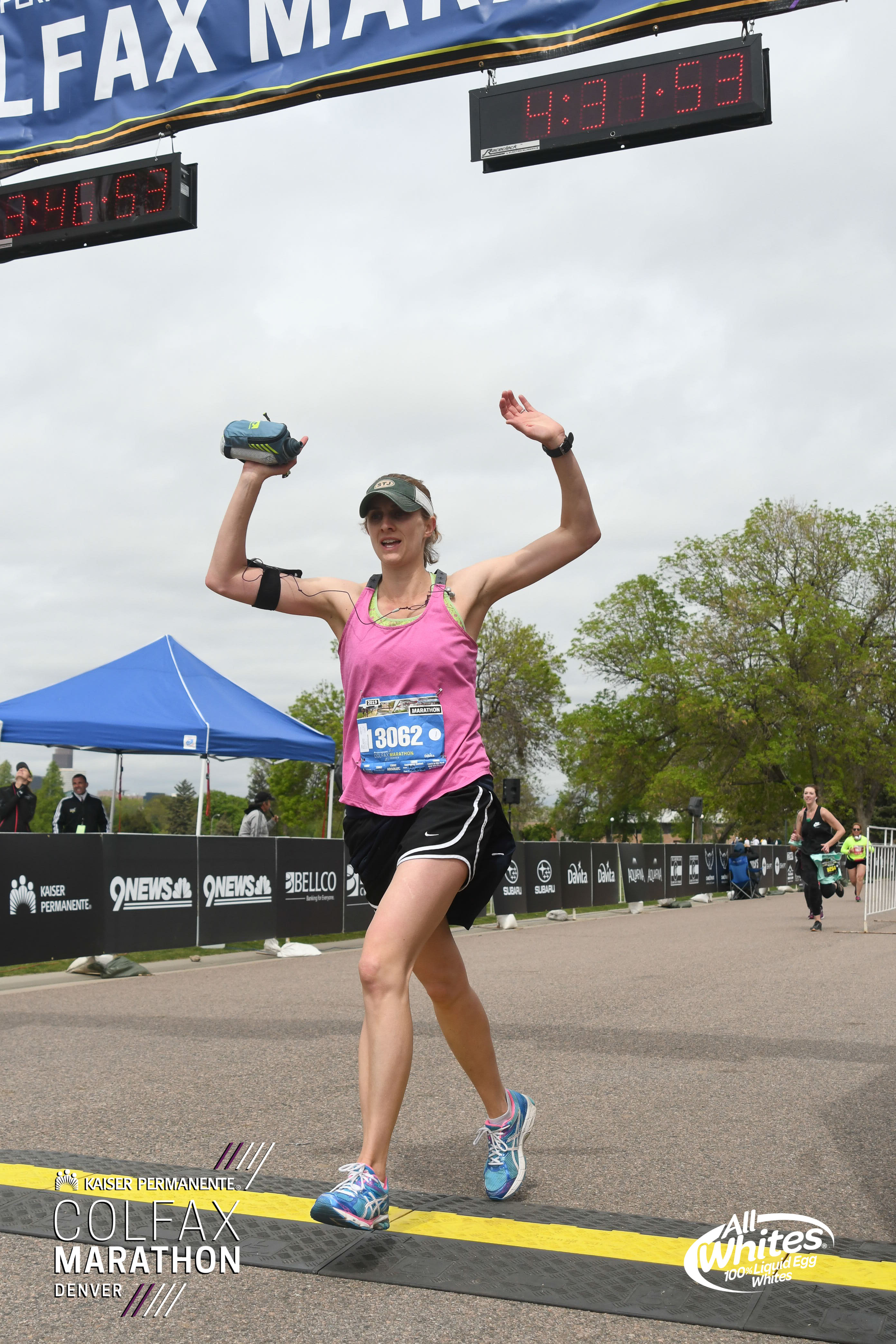
I ran the Colfax Marathon. On just about no training.
And I crushed it.
About three weeks before the race, my neighbor texted me to tell me she had seen me running on our street (something I was known for on our Colorado home block) and had a free race entry to the Colfax half marathon and full marathon. She asked if I wanted one as her company was raising money for Love Takes Root. This organization provides orphans in Haiti with a structured program to their days, clean water, health care, food, and comforts like cozy blankets and enough dishware for everyone. It is an incredible organization with a very focused mission. You can sponsor a child here.
Of course, I said yes to a free race entry, but thought I would just run the half marathon.
Remember my marathon itch? Remember that endurance events are addictive?
I could not say no to a free marathon entry to one of Denver’s iconic races right before we moved to Minnesota. So I opted for the full marathon knowing very well that I would have to walk during some portion of the race. I went into it with zero finish time expectations and an acceptance of the fact that I might have to be picked up by the sweeper van for not making the six hour cut off time.
With only three weeks from the time I learned about the race to actually running it, I attempted to “train” as best I could. I went for a 10 mile run, cleaned up my diet, mentally started preparing for the race, and tried to figure out a pacing that would keep me moving while getting me to the finish.


Before I get into the actual race, a serious disclaimer here: I do not recommend that you try to complete a marathon on three weeks of training. 26.2 miles is a serious distance and the only reason I took it on is because I have previously completed three of them. I had a running base of about 10 miles a week and two days a week of strength training, so I was not going from couch to 26.2.
If you have your sights set on a marathon, you need to train for a minimum of 10 weeks if you have a strong base already. I also recommend that you complete at least one or two half marathons to get your race day nutrition, gear, and jitters sorted.
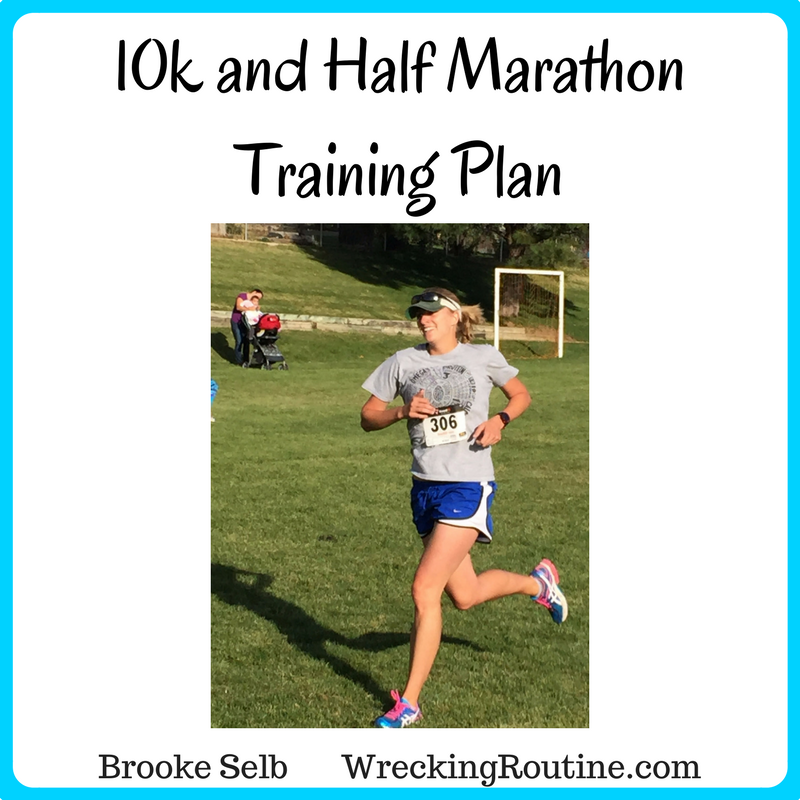
Ready to be an endurance athlete? Get your 10k/Half Marathon Training Plan here. This is the exact training plan that I have used to complete countless half marathons and 10k’s with a mix of interval runs, strength training, and long runs.
Want to best your 5k time? The Finish Line Strong Training Plan gives you a 12 week training plan no matter what level you are from beginner, to intermediate, to advanced. In addition to interval runs, you also get twice a week runner specific strength training workouts to make that finish line easy to cross and leave you ready for more.

On to the race!
For those interested in the longer recap: keep reading.
For those short on time: I finished in 4:19:30, was able to run at an average of 9:20 pace until mile 21.5 when my right quad started cramping and I had to take some walking breaks. I loved every single minute of this race from the course, to my attitude towards it, to surprise spectators at the finish line.
I left the house pretty early to drive downtown and make sure I got a close by parking spot. The race directors recommended that if you were parking yourself, you were parked by 5:15 am. It was a chilly, cloudy morning, so once I was parked, I sat in the car for about 20 minutes, then loaded up with race gear before heading to the start line.
As runners were lined up in corrals, there was the typical nervous and excited energy from the crowd. I had purposely put myself in the last corral with an estimated finish time of 5:30:00. My fastest marathon to date is 4:17:30 after 10 weeks of intensive training, so I was fully expecting to need all the time the race allowed.
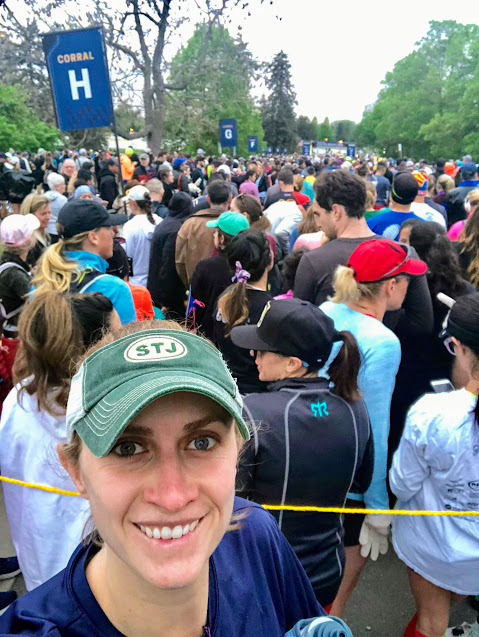
When my wave finally got to the start (they staggered waves by about 60 seconds), I was jittery, excited, and just genuinely curious if I could actually do this. It was almost a relief when the start gun went off because I could finally put the nerves behind me and just run.
Miles 1-3 were a blur as everyone settled into their paces and let the starting gun adrenaline wear off. My Garmin boasted a pace of 9:07 for those first three miles and I knew I would not be able to keep that up for long, but I felt great, so I just kept going. I figured when my body started to hurt, I would just slow down since I had no reason to push the pace as I was not going for a personal best.
The “have fun and just run what I can” race strategy started to pay off as I caught up to the five hour pace group and then the 4:45 pace group. I am not sure what mile mark I was at by this point, but I know I was in elated disbelief that I was keeping such a steady pace and feeling so good.

I started to wonder if I had the stamina to catch the 4:30 pacers and was in a state of complete elated disbelief when I actually passed the 4:15 pace group somewhere around mile 17.
The half marathon mark passed in 2:00:45. For a reference, my personal best for a half marathon is 1:43:00 when I was highly trained and racing consistently. I was shocked at this time and went against my game plan of only running the first half and then walking. I was still feeling really good, so I kept with my pace of about 9:15 minute miles.
Around mile 21, my right joints (ankle, knee, hip) were complaining too hard to ignore. I slowed my pace a bit and tried to straighten out my posture to ease some of the pressure. By mile 21.5, my right quad, directly above my knee, decided it was time for a cramp, causing me to move to the side and walk while it calmed down.

In my previous marathons, any type of walking would have had me bursting into tears, but this race was different. I was relaxed, rather impressed with how far I made it before needing to walk, and just enjoyed the scenery while cheering on other runners. Usually at this point in a marathon, many people are taking on the walk/run method, so there was plenty of motivation needing to go around.
For about a mile and a half, I did a walk/run combination as my quad came back to normal. At mile 22, I started crunching some pacing numbers and realized that I had a very real chance of running a personal best. It was incredibly motivating to walk fast, run when I could, and just keep moving in an attempt to get under 4:17:00.
Starting at mile 24, I felt much better and was able to run the rest of the way with a 9:50 pace for the last 2.2 miles.
In the last half mile, as runners enter City Park, I almost leapt out of the race in shock as Rob, Zoey, and William were standing on the side of the race course in the group of spectators. We had agreed that taking the kids all the way downtown with the limited parking, road closures, and proximity to nap time would just be too much for one person, but they surprised me with cowbells in hand! It was the exact boost I needed to climb the finish hill and end the race smiling.


My official race time was 4:19:30. My fastest marathon, my third, was 4:17:30. Not too shabby at all.
Once I crossed the finish line and connected with Rob and the kids out in the after party area, we had a post-race beer, some snacks, and just enjoyed the music and sunshine. Sitting there with Zoey and William crawling the grass, recapping the race with Rob, and the serious runner’s high was the absolute highlight of the whole day.

Figuring out how best to fuel my body during a marathon took me until marathon three to actually get right. Knowing what works for me was a huge part of the relaxed attitude I had going into this feat. As a salty sweater, my nutrition plan looks like this:
- Gu every 4 miles (no caffeine)
- Hammer Endurolyte every 5 miles
- Water every mile
This may not be the nutrition game plan that works best for you, and I very strongly urge you to play with different brands, timings, electrolyte levels, and water intake variations before you settle on the best plan. On race day, do not deviate from exactly what you did in training that you know works. I spent the end of two marathons in the medical tent for at least half an hour, so I strongly urge you to make this a top priority within your training plan.
Since I had a free entry to this race and no real expectations for myself other than to try and finish, I was truly able to enjoy the race. I looked around a ton to take in the views, cheered on other racers, and stayed calm and joyful throughout. It was seriously the best race I have ever run.

After four marathons, I can say that this was my absolute favorite race course. There was always something interesting to look at whether it was running through Mile High Stadium where the Broncos play, high fiving through a firehouse, scoping out houses in the cutest residential neighborhood, running around Sloane lake, or running along Cherry Creek Trail, I was hardly ever board. There were a total of three miles when we had to run straight back on Colfax around miles 17-20 that I felt underwhelmed with the views along the route. This section was downhill, which helped with the monotony. If you have your sights set on a Denver race, I highly recommend the Colfax.
Running Gear that got me to the finish line:
- Arm Band
- Nathan Handheld Water Bottle
- Endurolyte Salt Pills
- Yurbuds
- Garmin Forerunner 265
- Gu’s
- Body Glide
Ready to have your own runner’s high? Grab your training plans!
The Finish Line Strong Training Plan offers three different plans depending on your level (beginner, intermediate, advanced) with two interval runs, one long run, and two strength workouts each week to have you crossing that finish line feeling strong, confident, and ready for more.
Get the Finish Line Strong Training Plan here.
The 10k/Half Marathon Training Plan is ideal if you are looking to complete a longer distance. With strength workouts, interval runs, and long runs, you will have the stamina to finish the endurance event of your choice.
Get the 10k/Half Marathon Training Plan here.


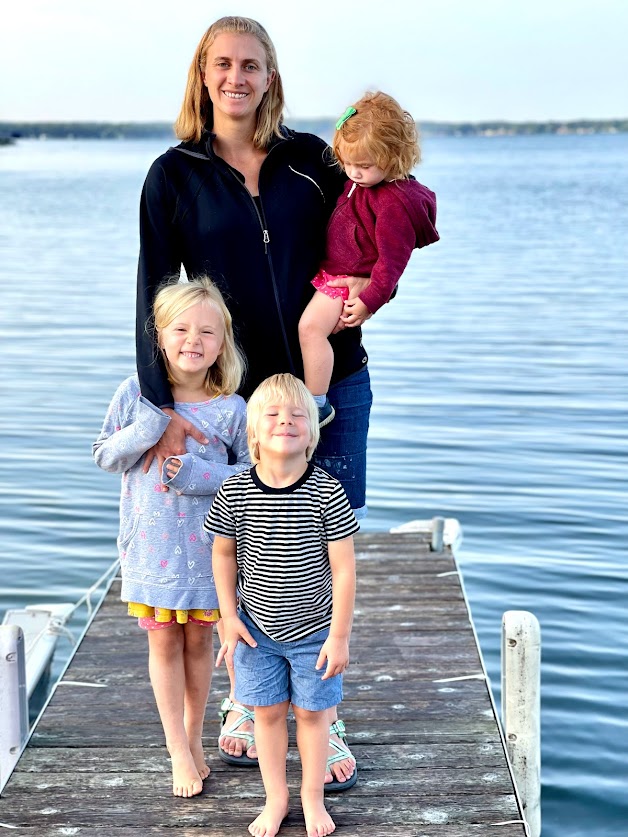
I’m Brooke Selb, a Personal Trainer and Health Coach specializing in helping busy moms and moms to be to easily juggle mom life with family friendly recipes, and easy exercise routines to help you achieve your fitness goals that fit in with your already busy life with sound nutritional advice.


Trackbacks/Pingbacks