
As much as I adore running, there are some days when a plyometric workout hits the cardio spot. Plyometrics are ideal as a more advanced workout in order to improve athletic performance, fat loss, strength, and endurance. Plyometrics also work to train your fast-twitch muscle fibers, something as a distance runner I desperately need.
With plyometrics being more a more advanced move that focus on athletic performance, coordination and agility, I do not recommend you try them until you have a strong foundation of balance, core strength, and general endurance. I would also avoid plyometrics if you have any back or knee problems as the impact from landing can compound those injuries.
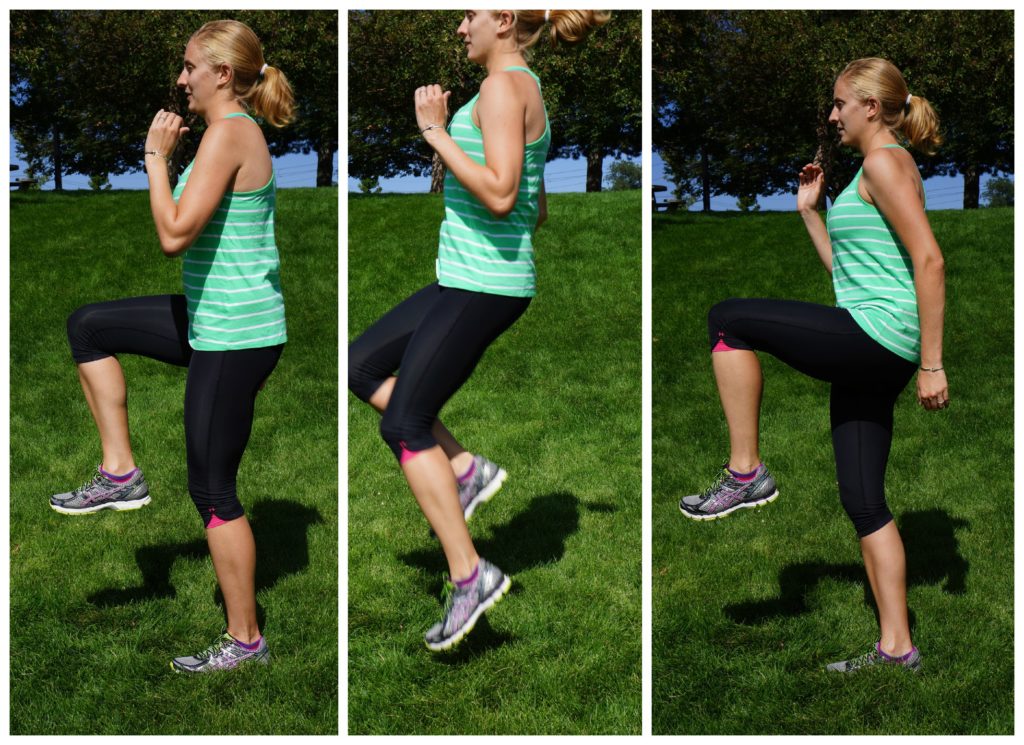
For every plyometric move, or move where you leave the ground only to land again, you want to really focus on your landing positions. You want to land softly and with your body aligned, meaning your chest and head are up, your shoulders are back, and your knees are not bowing or buckling.
Before starting the workout, be sure to warm up with some light cardio (5-10 minutes), and dynamic stretching. Do the same as a cool down when you finish your workout. Get a free copy of the warm up and cool down routine I recommend here.

You can also check out my must have workout resources here. These are the things I use weekly, if not daily, to make my workouts as easy and comfortable as possible.
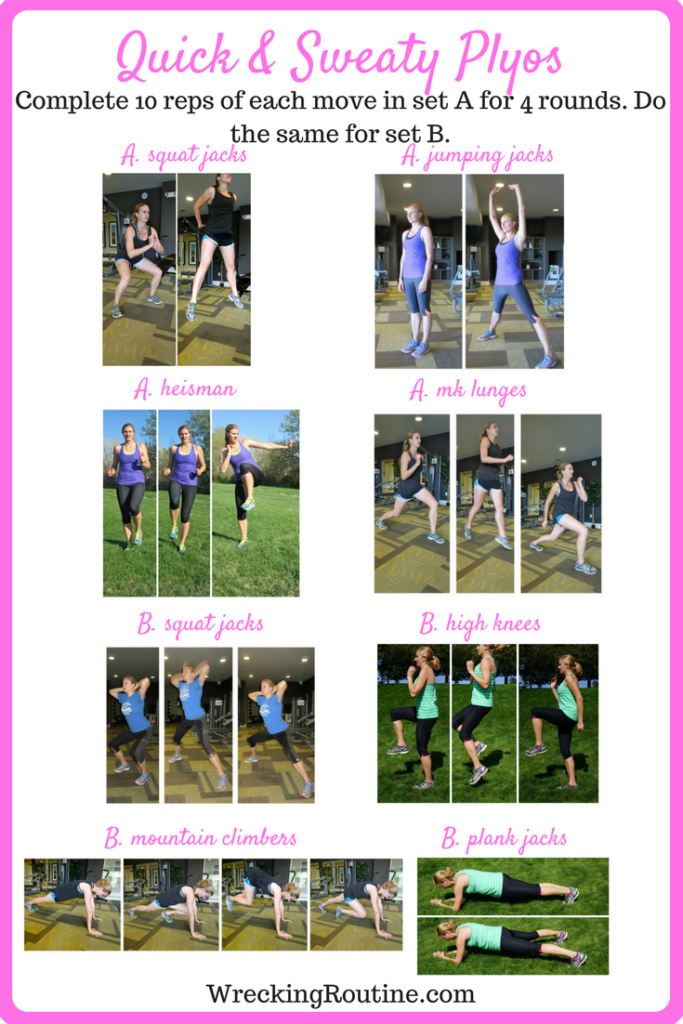
Quick & Sweaty Plyos
Complete 10 reps of each move in Set A for a total of 4 rounds. Do the same for Set B.
Set A:
- Squat Jumps
- Jumping Jacks
- Heisman
- Jump Lunges
Set B:
- Squat Jacks
- High Knees
- Mountain Climbers
- Plank Jacks
If any of the moves are too much for you right now, take a look at the modifications below. Always modify your workouts and specific moves as needed.
Additionally, if you want to challenge yourself further by advancing the moves, there are descriptors below on how to do that as well.
Squat Jumps
- Modified: Use a very low jump, or regular squats.
- Advanced: Hold a light weight in each hand when you jump.
Jumping Jacks
- Modified: Step out from side to side instead of jumping.
- Advanced: Complete cross body jacks. IMAGE
Heisman
- Modified: Step to the side instead of jumping.
- Advanced: Hold a light weight in each hand.
Jump Lunges
- Modified: Switch between legs without jumping.
- Advanced: Hold your arms straight over your head (biceps near ears).
Squat Jacks
- Modified: Step out from side to side instead of jumping.
- Advanced: Hold one weight in both hands as you jack.
High Knees
- Modified: Step your legs up instead of jumping.
- Advanced: Raise your arms straight over your head (biceps near ears).
Mountain Climbers
- Modified: Rest your hands on a wall and keep your body straight, but at a slight lean. Raise your knees as close to your chest as possible as quickly as possible.
- Advanced: Rest on your elbows rather than your hands.
Plank Jacks
- Modified: Hold a plank position from your hands, not your elbows. Step your feet out and back one at a time.
- Advanced: When you jack out, raise up onto your right hand. When you jack in, raise up onto your left hand. When you jack out, come back down to your right elbow. When you jack in, come back down to your left elbow. Repeat this pattern for the duration or reps.
Let me know if you try it out and how you liked it! Keep in mind that you should not do plyometrics every day. I only recommend them 1-2 times per week.
More plyometric workouts to try:
Get your 5 Week Health & Fitness Plan complete with daily workouts, a weekly nutrition focus and daily mindset questions here.
Have you ever done plyometrics before? For what purpose?

I’m Brooke Selb, a Personal Trainer and Health Coach specializing in helping busy moms and moms to be to easily juggle mom life with family friendly recipes, and easy exercise routines to help you achieve your fitness goals that fit in with your already busy life with sound nutritional advice.


Trackbacks/Pingbacks