*I am not a Registered Dietician. I am a NASM Certified Personal Trainer. Please see a physician and/or dietician before starting any new exercise plan and diet.
Most of my clients have the working out part down. They show up to the gym, sweat hard, and make gains in their fitness levels. However, when it comes to what they should eat, they tend to be a bit lost, overdo it, and/or under-do it.
With all the different “diets” and “quick fixes” out there, the whole eating thing can be really confusing. Plus, when it comes to the saying, “Eat food. Not too much. Mostly plants,” many of us want to know what that looks like in reality.
There are 4 suggestions I keep in mind when it comes to what to eat and when. These suggestions come to you with the grain of salt that I am not paleo, gluten free, sugar free, or restrictive of my diet in any way. My overarching philosophy is everything in moderation, including moderation.
1. Think of food as fuel. I read this statement somewhere about a year ago and it has stuck with me. If you look at your food in terms of how it will best support your body, then it changes your decisions on what you buy/order/cook. What you put in your body has a direct correlation to how well your body will function and it’s up to you as to what level of functioning that is. Loading up on healthy carbohydrates (fruits, vegetables), proteins, and healthy fats will have your body operating as efficiently as possible.
2. Decide what “bad” foods you actually like. Labeling particular foods as “bad” irritates me. There are foods that are better for you than others, sure, but attaching a negative word to certain things can really mess with your psyche.
Make a list of the “bad” foods you crave, or the foods you “cheat” with. Then, go through each item (not in the same day!) and taste them individually. Decide if you actually like the foods on that list. If you find in your taste test that your taste buds aren’t thrilled, then that food won’t be on your “bad” list or “cheat” list; it will just be something you don’t like. Most people don’t like sardines so they just don’t buy them (no judgements if you adore sardines!).
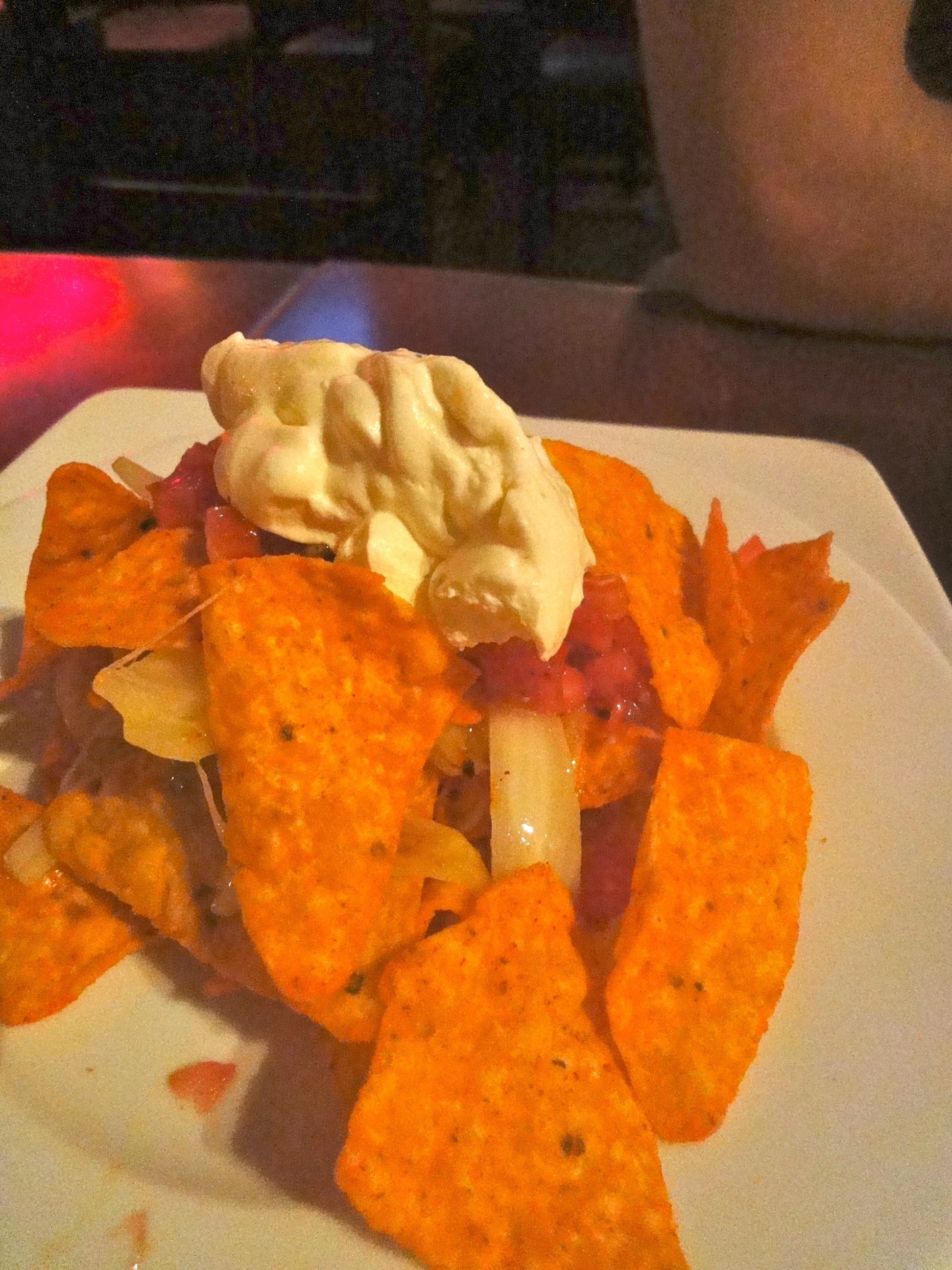
Dislike: Vietnamese Nachos = nacho cheese Doritos + sour cream + onions.
3. Get in tune with how food makes you feel emotionally and physically. The physical part of this relates to #1, but the emotional aspect of specific foods is huge. For example, one of my favorite things is to eat chips while watching a chick flick. There is just something magnetic about it for me, but when the movie is over and the entire bag of chips is gone, my emotions plummet and I start berating myself for eating all of that. Not a good cycle. Knowing, emotionally, how certain foods make you feel will help you steer clear of them or eat more of them (hopefully the healthier ones).
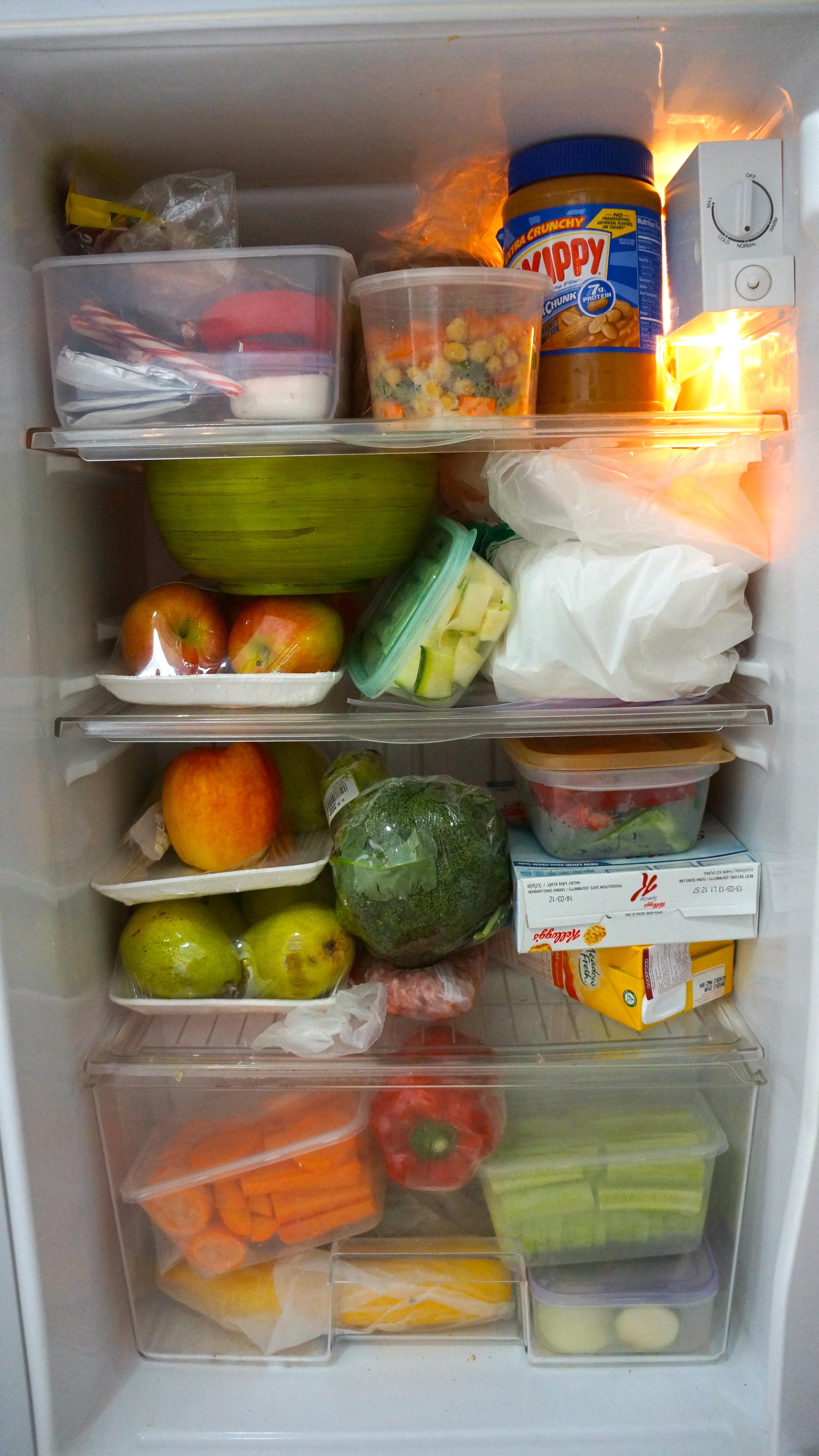
Our Vietnamese fridge with EVERYTHING in it because we had ant issues.
4. Practice intuitive eating. This suggestion combines 1 and 2. Eat when you’re hungry, stop when you’re full. Sounds simple, but many of our jobs dictate our meal times and many of us were raised with the clean-plate-or-no-dessert mentality. Intuitive eating really requires you to listen to your body, so that you are not just eating because it’s meal time, but rather because you are actually hungry. This one takes a bit of practice and breaking out of social norms, but can be extremely effective because you’re doing what your body needs.
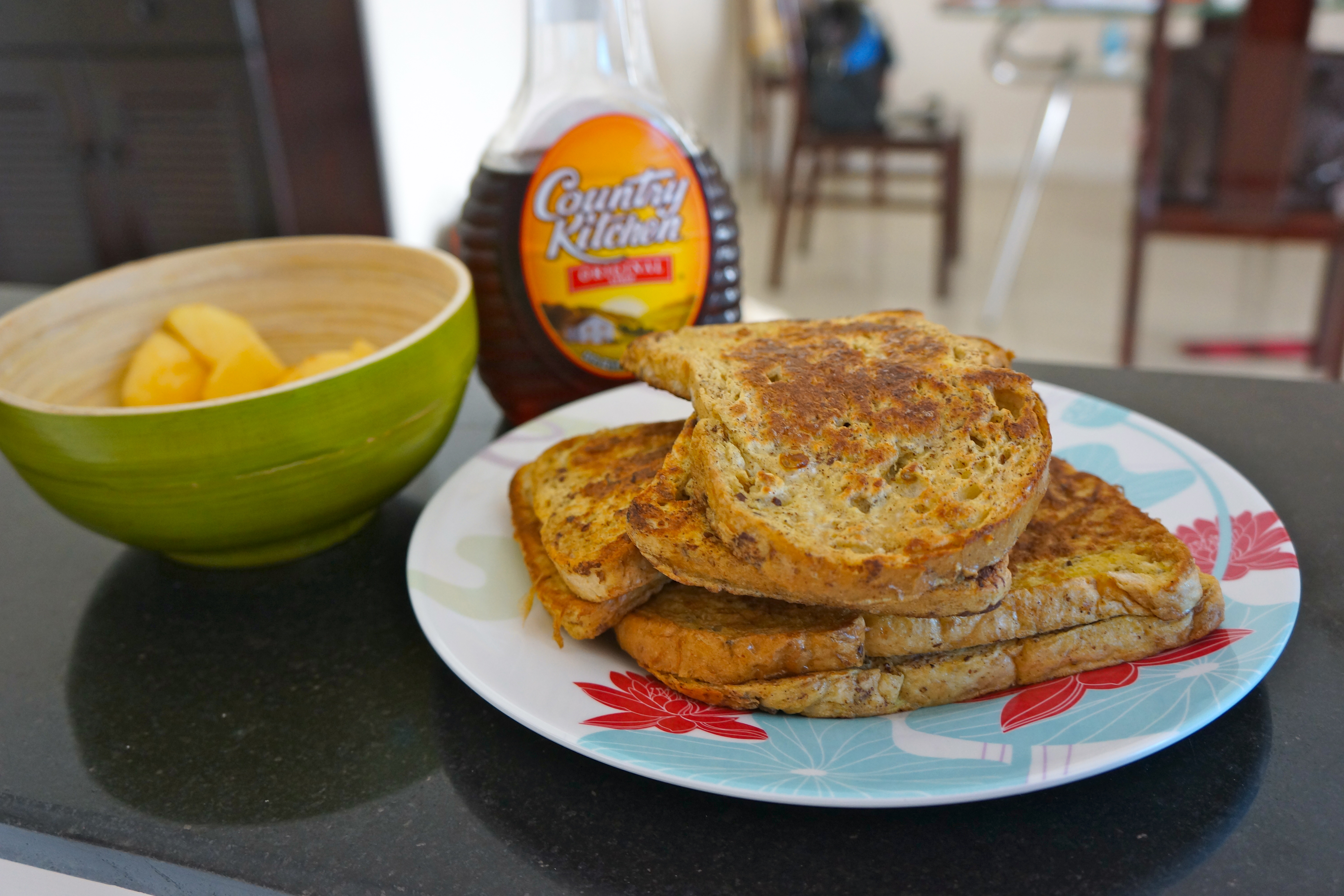
You don’t have to eat ALL the french toast.
There you have it! The four things I keep in mind when it comes to food. For me, they help keep me in check but still allow me to enjoy meal time rather than making it a stressful and restrictive situation.
RQ: How do you determine what to eat and when? What other suggestions do you keep in mind?

I’m Brooke Selb, a Personal Trainer and Health Coach specializing in helping busy moms and moms to be to easily juggle mom life with family friendly recipes, and easy exercise routines to help you achieve your fitness goals that fit in with your already busy life with sound nutritional advice.


Thanks for the tips. I know them, but we all need reminders and I feel like a failure tonight…just went out to dinner on date night and over ate….feeling so full and annoyed at myself. I’ll do better. One day at a time. 🙂 Jess
It was a date night! You shouldn’t beat yourself up if it’s something that happens once in a while.
Great post!!!
Thanks, Heather! I am loving reading about your marathon training updates! Still having issues commenting on blogger blogs, but I am reading behind the scenes.
Good post. My one and only real downfall are chips + salsa. I will eat them all the time. So I try to limit what I buy and when I do not have any in the house, I tend to go towards other healthier things. Sometimes, not all the time, though 🙂
I LOVE chips and salsa! So so good for some reason, especially the homemade kind.
These seem like good basic rules, and pretty much the ones that I go by. I’m currently experimenting with a more restrictive diet to see how it affects me. I’m only eating meat once a day or less, and trying to get a wider variety of veggies in my life. Sometimes you get in a rut and need a jolt or something to push yourself out of it you know?
I definitely know about the rut and the jolt. I hope your semi-vegetarianism works out well for you. It will be interesting to see how it effects your body.
This is all great advice! My biggest issue is that I wait too long to eat, and then I’m ravenous, and suddenly the box of cereal is gone. It’s especially bad during the school year, but I’m working on it!
In other news, I flipping love sardines. I have to eat them when Jordan is out of town because he can’t even stand the smell of them.
That’s the hardest part about the school year. I always feel bad eating in front of my students during class, but sometimes I just have to get something in my belly.
I’ve actually never tried sardines, but I am with Jordan on the smell. Not for me. That just means there are more for you!
Great advice! Because I do a lot of training and need a lot of calories to fuel my active lifestyle, I try to pay attention to hunger cues and make a strong effort to fuel before, during, and after workouts with nutrient rich foods. I used to obsess about what I eat but found that it created a negative relationship with food. I am now just more aware of how food makes me feel and how it affects my body and physical performance.